How Digital Workflows Are Transforming Drilling Fluid Operations
How Digital Workflows Are Transforming Drilling Fluid Operations
The Hidden Cost of Paper in Drilling Fluid Operations
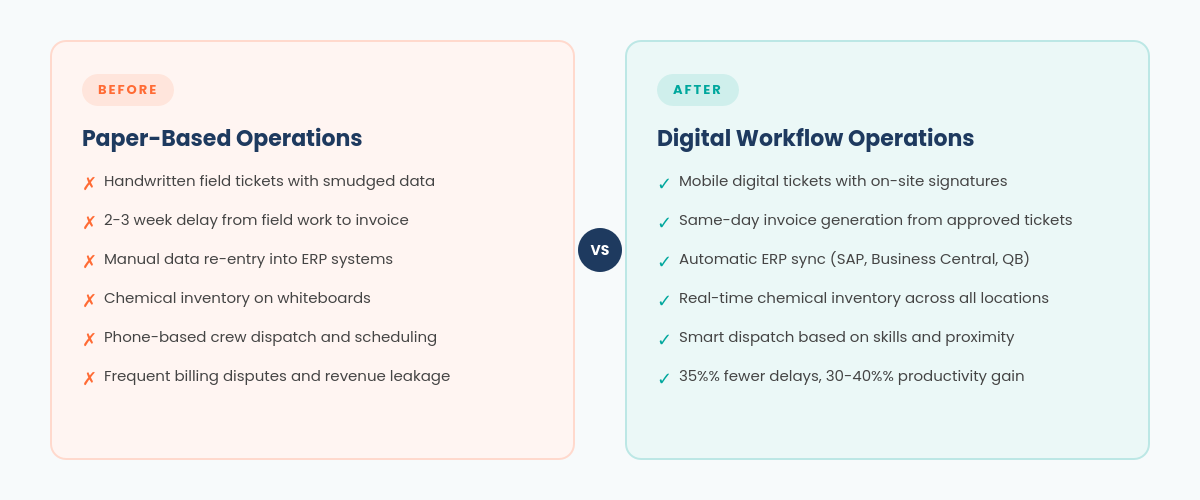
Suppose a drilling fluid technician stands at a remote well site at 6 AM, filling out a handwritten field ticket in the rain. The ink smudges. A column gets skipped. That ticket rides around in a truck for three days before someone in the back office squints at it, tries to decipher the numbers, and manually keys everything into an ERP system. By the time an invoice goes out, two weeks have passed and the data has been touched by four different people.
This scenario plays out every day across the drilling service industry. And the irony is striking: while fluid chemistry has evolved dramatically with nano-enhanced formulations and AI-driven rotary steerable systems, the operational workflows behind drilling fluid operations remain stuck in the paper era.
Digital workflow automation represents the next frontier for oilfield fluid services companies looking to reduce costs, accelerate revenue, and improve data accuracy. It is not just about going paperless. It is about connecting every step from field ticketing to invoicing into a single, seamless digital process.
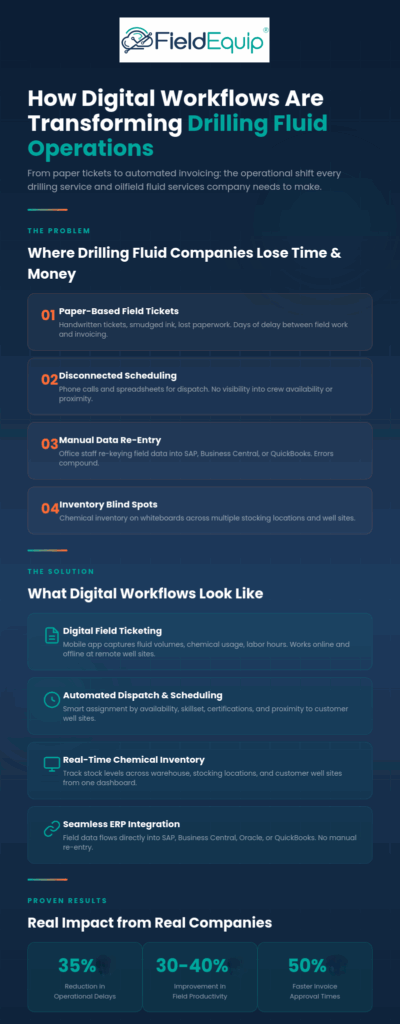
Where Drilling Fluid Operations Lose Time and Money
Most drilling fluid service companies face four persistent workflow bottlenecks that drain productivity and revenue:
Paper-based field tickets: Technicians manually record fluid volumes, chemical usage, equipment hours, and well site conditions on paper. These tickets are prone to errors, illegible handwriting, and physical loss. The result is days or weeks of delay between completing field work and generating an invoice. According to industry research, companies using digital field ticketing solutions report an average 35% reduction in operational delays.
Disconnected scheduling and dispatch: Assigning fluid technicians and pump trucks through phone calls and spreadsheets leaves managers with no visibility into crew availability, certifications, or proximity to customer well sites. The right scheduling and dispatch software can match the right technician to the right job automatically.
Manual data re-entry: Office staff spend hours re-keying field ticket data into ERP and accounting systems like SAP, Business Central, or QuickBooks. This duplication of effort introduces data inconsistencies and delays financial reporting. Seamless ERP integration eliminates this bottleneck entirely.
Inventory blind spots: Chemical inventory tracked on whiteboards or spreadsheets across multiple stocking locations creates gaps in visibility. Drilling fluid companies and well completions teams need to know exactly what chemicals are at which customer site, warehouse, or stocking location at any given moment.
What Digital Workflows Look Like for Drilling Fluid Companies
A digitally-enabled drilling fluid operation replaces disconnected manual steps with an integrated, automated process. Here is what that looks like in practice:
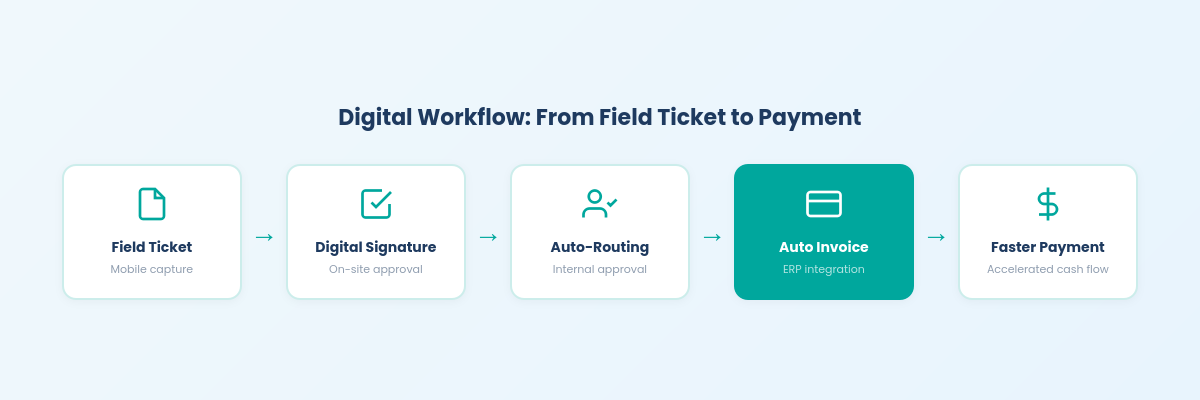
Digital field ticketing: Technicians capture fluid volumes, chemical usage, labor hours, and equipment data on a mobile app that works both online and offline at remote well sites. Digital signatures from customer representatives are captured on-site, and completed tickets are automatically routed for internal approvals and customer sign-off. This is the foundation of modern field service management for drilling service companies.
Intelligent dispatch and scheduling: Instead of phone calls and guesswork, a smart dispatch system assigns fluid technicians based on availability, skillset, certifications, and proximity to customer well sites. Gantt chart scheduling with drag-and-drop resource planning gives supervisors full visibility into crew allocation.
Real-time chemical inventory management: Track chemical stock levels across your warehouse, stocking locations, and customer well sites from one dashboard. Transfer logs, usage history, and reorder alerts ensure you never run short at a critical moment. This is especially valuable for oilfield fluid services companies managing inventory across dozens of locations.
Seamless ERP integration: Field data flows directly into SAP, Business Central, Oracle, or QuickBooks with no manual re-entry. Invoices are generated from approved field tickets automatically, resulting in faster payments, fewer billing disputes, and accelerated cash flow.
Configurable workflows: Every drilling fluid company operates differently. Configurable workflow automation adapts to your specific business processes, approval chains, and reporting requirements rather than forcing you into a rigid template.
Real Results: How Digital Transformation Is Already Working
The shift from paper to digital is not theoretical. Drilling service companies and oilfield fluid services providers are already seeing measurable results:TinCup Water Solutions eliminated paper tickets entirely and achieved complete automation from field ticketing to invoicing and reporting. The result was a dramatic improvement in operational efficiency across their entire organization.
FieldEquip digital solutions allowed our organization to automate and digitalize manual processes, which resulted in a remarkable increase in the overall operational efficiency.” John Elton, VP of Support Operations, TinCup Water Solutions
Flo-Rite Fluids Inc. centralized all workflows onto one platform and gained full visibility of field inventory at customer sites, stocking locations, and their main warehouse. The company reduced invoicing and payment delays and expedited cash receipt through improved data accuracy. For any drilling fluid operations team managing a distributed installed base, this kind of visibility is transformative.
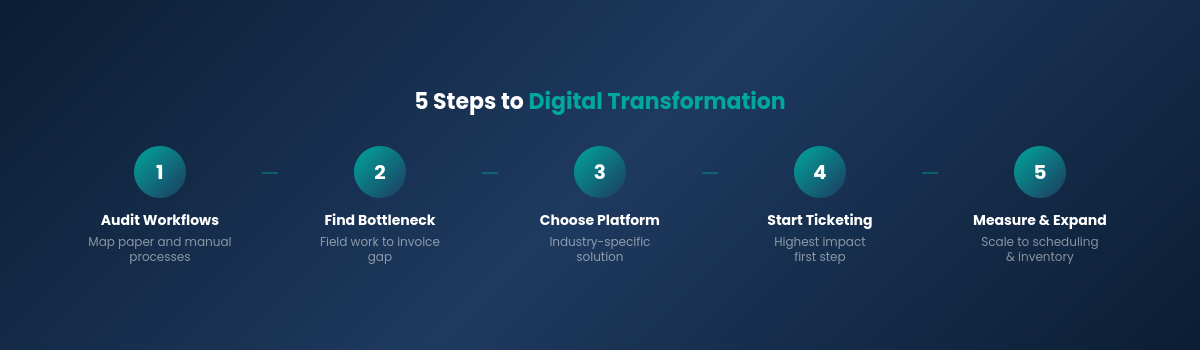
Making the transition from paper to digital does not have to be overwhelming. Here is a five-step roadmap that drilling fluid companies and well completions teams can follow:
Audit your current workflow: Map every point where paper, phone calls, and manual re-entry exist between the field and the office. Identify the handoffs that create the most delay and the most errors.
Identify the revenue bottleneck: For most drilling service companies and oilfield fluid services providers, the biggest bottleneck is the gap between field work completion and invoice generation. Shortening this gap has a direct impact on cash flow.
Choose a platform built for your industry: Generic project management tools do not handle field ticketing, chemical inventory, or ERP integration for oilfield services. Look for a solution specifically designed for drilling fluid operations and field service management.
Start with one workflow:Digital field ticketing is the highest-impact starting point because it touches every downstream process from approvals to invoicing to reporting. Get this right first, then expand.
Measure and expand: Track time-to-invoice, data accuracy, and field team productivity. Once you have proven results with field ticketing, extend digital workflows to scheduling, inventory management, and equipment tracking.
The Next Performance Leap
The drilling fluid industry’s next performance leap will not come from a new chemical additive or a better pump design. It will come from digitizing the workflows that connect field operations to the back office.
Companies that make this transition gain faster revenue cycles, more accurate data, better crew utilization, and a competitive edge that compounds over time. Those that wait will find themselves falling further behind competitors who can generate same-day invoices, provide clients with real-time job status, and make data-driven decisions about resource allocation.
Whether you manage drilling fluid operations, well completions, or any oilfield fluid services workflow, the path forward is clear: eliminate paper, automate approvals, and connect the field to the back office. Schedule a demo to see how FieldEquip can help your team make the switch.
Contact Us
Would you like to have a free demo or have any questions about FieldEquip?
ADDRESS:
US Corporate Headquarters 1011 S. Hwy. 6, Suite 117 Houston Texas 77077 US